Perspective
AI should help you reach people, not just publish more.
The best question in journalism has nothing to do with technology.
“How do we reach people more effectively? How do we make journalism more relevant, more accessible, more valuable? And why is the pace of development so frustratingly slow?”
That question is Martin Schori’s. As deputy publisher and head of AI and innovation at Aftonbladet, Sweden’s largest newsroom, he led one of Europe’s most closely watched newsroom AI programs, and he poses it in his book, AI in the Newsroom.
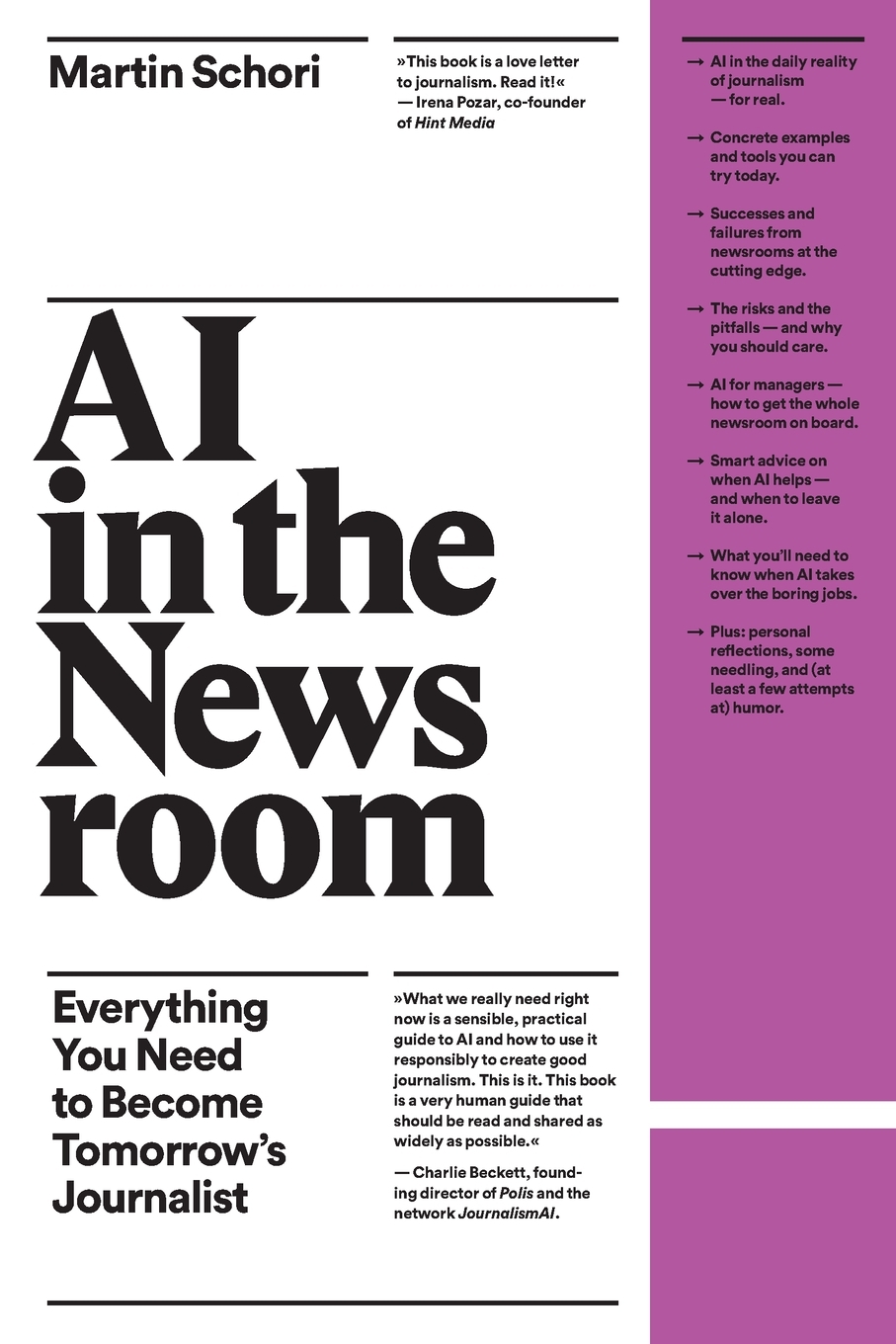
It’s the right question, and it’s not the one most newsrooms are asking.
Today, most AI sold to newsrooms promises the same content, faster and cheaper, and above all more of it. The appeal is real. It fits the tools you already have and the pressures you already feel, and the savings are genuine. But efficiency has a ceiling: the same stories, in the same shape, reaching the same people, just produced faster. More content is not the outcome. Reaching people is.
The trap of more
Follow the logic of faster and cheaper to the end and you know where it lands. Schori names the destination:
“We fill the feeds with even more content that no one asked for, no one remembers, and fewer and fewer trust.”
That is not a hypothetical. It is the direction the whole system is already pointing. The incentive structure rewards volume. The tools make volume cheap. Trust does not track volume, and neither does attention.
Here is the part worth engaging with. The problem is not your journalism. Your reporting is world class. The problem is the shape you are asked to pour it into, and the machinery that says the answer to a flooded feed is to add more to the flood.
If AI simply lets you do more of what you already do, you have not reinvented anything. You have accelerated a race you were already losing.
What AI actually is, and what it is not
Schori puts it plainly:
“AI does not understand what you mean. It guesses what you want. It sounds confident, but it does not know what is true.”
That single sentence should govern how any serious newsroom deploys this technology. Confidence without truth is not a feature. In journalism it is a liability. Which means the human work at the center of your operation is not up for automation.
Reporting stays human. Judgment stays human. Context stays human. Voice stays human. Accountability stays human. “Journalism rests on being able to take responsibility for our publications,” Schori writes, “and in many cases, our processes.” A machine that guesses cannot take responsibility. A person can.
So the line is not fuzzy. AI does not report the story. AI does not decide what matters. AI does not carry your voice or answer for what you publish. Draw that line hard and the real opportunity comes into focus.
The right use: reach the people you are missing
Martin and I were both at WAN-IFRA’s Paris event this month. Across the program, the presenters kept reinforcing the same need: be audience first. Different rooms, different tools, the same conclusion.
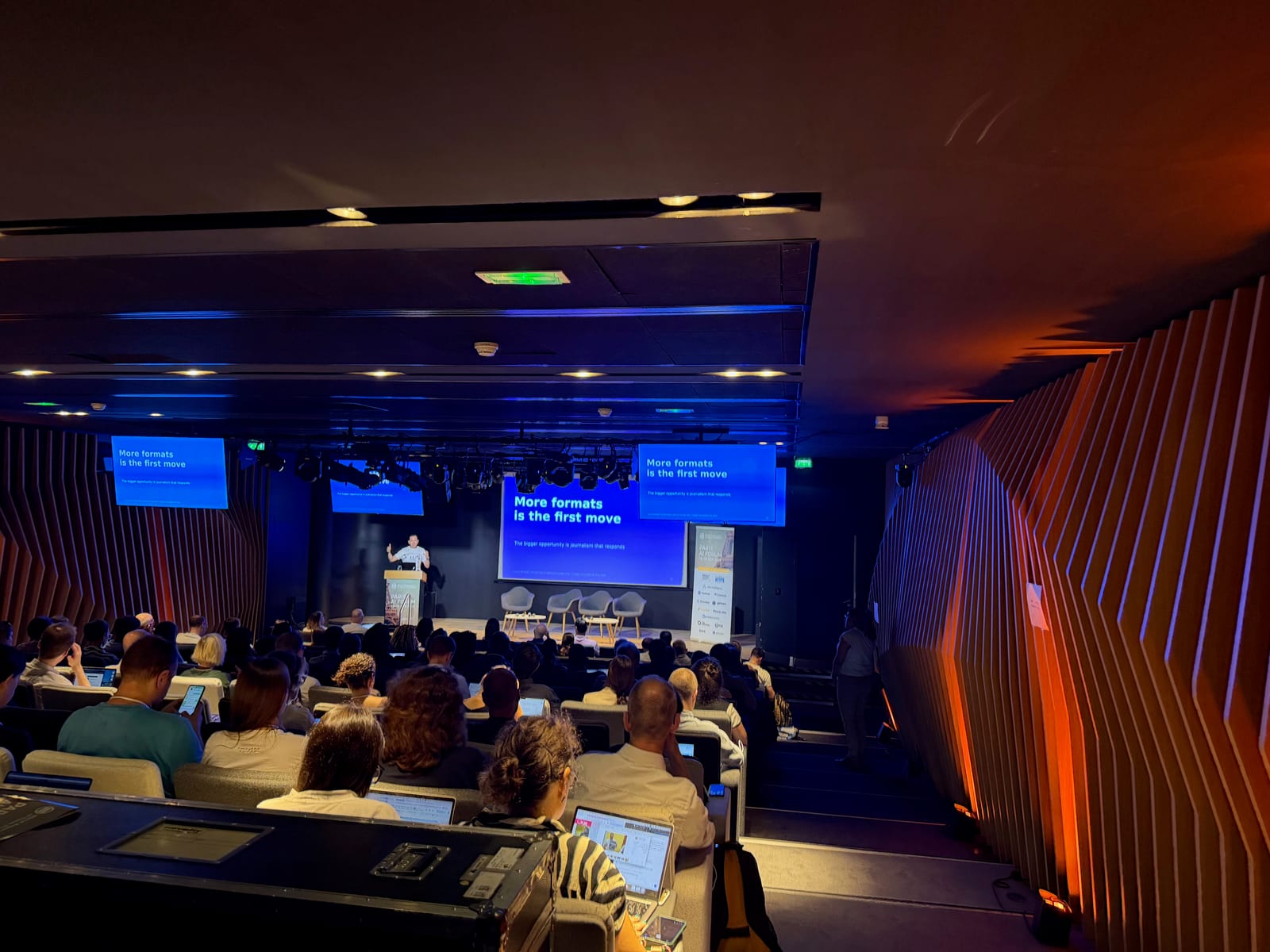
The opportunity is not production for its own sake. It is reach. Schori is exact about it:
“Used correctly, AI can both make visible what we miss and deliver it to those who would otherwise never have found it.”
Read that twice. Make visible what we miss. Deliver it to those who would otherwise never have found it. That is a distribution outcome and an editorial outcome at once. It is the difference between filling a feed and finding a reader.
Every newsroom publishes work that never reaches the person it was written for. The reporting is done. The story is sound. It simply never arrives in the format that person uses, at the moment they would care. That gap is not a reporting failure. It is a shape failure. Same story, wrong container.
I have watched a strong investigation land beautifully on the homepage and vanish everywhere else. The newsletter version never gets made because someone has to make it by hand. The vertical cut for the feed never ships because the person who could ship it is already on tomorrow’s story. The work exists. The reach does not. Not for lack of talent. For lack of time.
Free the time, then spend it on what matters
This is where the mechanics come in, and where they belong. Second, not first.
Every story you publish contains repeatable elements. A headline. A summary. A pull quote. A vertical cut for the feed. A newsletter framing. Today most of that reshaping is manual, which means it competes for the same hours as reporting, and reporting usually loses.
HyperContent™ treats those elements as structured parts of the story rather than tasks rebuilt from scratch every time. That’s what lets one story become the newsletter version, the vertical cut, and the explainer, without a person rebuilding each by hand. The story stays intact. The versions that never got made start shipping. And the hours that went into reformatting go back to reporting.
The point of that freed time is not to produce more. Schori is direct about where it should go:
“We must free up time for the journalism that truly makes a difference, the journalism that AI cannot replace.”
And it should go toward reaching people in the formats they actually prefer. As he puts it, we should use AI “to reinvent ourselves and deliver what the audience wants, in the format they prefer.”
Not more content. The same content, in the shape that reaches someone.
Make yourself indispensable
There is a final test for any of this, and Schori names it:
“We must do journalism that cannot be summarized in three points.”
That is the whole game. If your work can be flattened into three bullet points by a machine, a machine will flatten it, and your reader will take the summary and skip you. The journalism that survives is the journalism that resists summary. The context. The voice. The reporting no model can generate because it required a person in a room asking a question.
“We must engage, not just inform. Simply put: make ourselves indispensable.”
You do not become indispensable by publishing more. You become indispensable by doing the work only you can do, and by making sure it reaches the people who need it. AI has a role in the second half of that sentence. It has no role in the first.
The takeaway
Do not measure your AI strategy by how much more you can publish. Measure it by how many people your best work reaches, and by how much time your journalists get back for the reporting that cannot be automated.
Structure the repeatable mechanics. Protect the human work. Point the freed time at reach, and at the journalism that resists summary.
More of the right people, not more of the same content. That is the question worth answering. Start there.
Same story, different shape.